
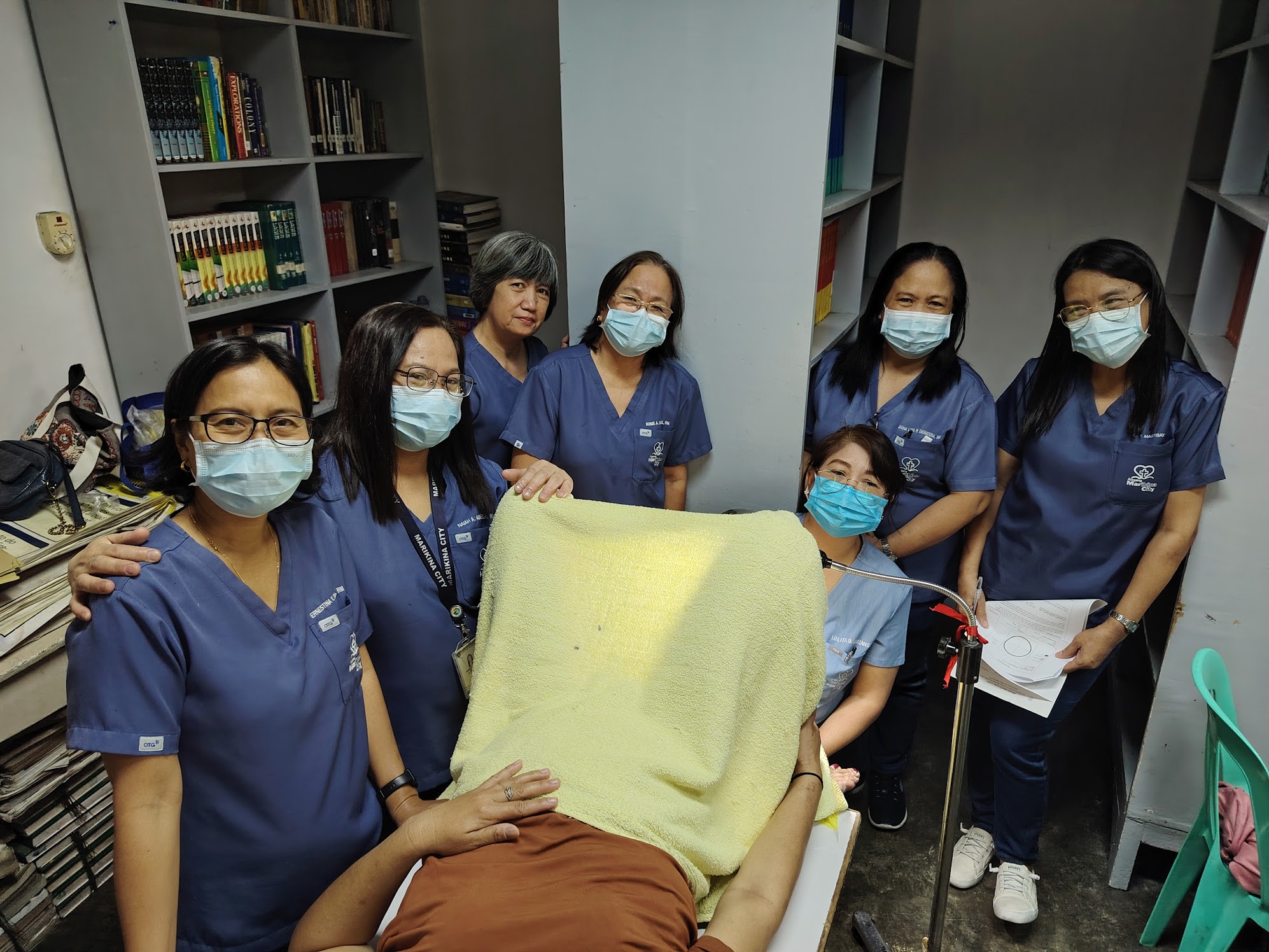
LGU Cervical Cancer Screening Partnership
Helping LGUs Build a Sustainable Cervical Cancer Screening System
We Bless We Care Foundation partners with local government units to help bring cervical cancer prevention, screening, early treatment, referral, and patient navigation closer to women in the community.
This program is designed for LGUs that are ready to move beyond one-time screening events and build a regular, measurable, and sustainable cervical cancer screening system through their local health facilities.
Initial implementation will focus on Bulacan and nearby communities, with the goal of helping LGUs strengthen women’s health services at the barangay, rural health unit, and midwife-clinic level.
Program Objective
The LGU Cervical Cancer Screening Partnership aims to help participating LGUs:
-
- Increase cervical cancer and HPV awareness in the community
- Train midwives and local health workers
- Conduct regular speculoscope-assisted VIA screening
- Improve documentation and doctor evaluation
- Provide a pathway for treatment of eligible pre-cancer cases
- Coordinate biopsy when needed
- Refer suspected cancer cases to tertiary hospitals
- Track and navigate patients who need follow-up care
Why Partner With LGUs?
LGUs are closest to the women who need screening.
Barangay health workers, midwives, rural health units, and city or municipal health offices are in the best position to identify eligible women, educate families, organize screening schedules, and follow up patients who need care.
By supporting LGUs, WEBC helps build a local system that can continue screening month after month.
Who May Join?
This program is open to LGUs, rural health units, and midwife-led clinics that are willing and able to conduct regular cervical cancer screening activities.
Priority may be given to facilities that can commit to screening at least 100 women per month.
Why Screen At Least 100 Women Per Month?
WEBC believes that cervical cancer prevention must be regular, measurable, and sustained.
A target of at least 100 women screened per month helps ensure that the investment in training, equipment support, doctor evaluation, treatment coordination, and patient navigation creates meaningful community impact.
The goal is not simply to conduct an activity. The goal is to help LGUs build the habit, system, and capacity to screen more women consistently.
Every month of screening means more women reached, more pre-cancer cases detected early, more suspected cancer cases referred, and more lives potentially saved.
Program Partnership Model
WEBC serves as the foundation partner that helps sponsor and organize the cervical cancer screening program.
CerviQ – End Cervical Cancer Philippines Organization Inc. serves as the technical implementation partner, providing support for training, speculoscope-assisted VIA screening, image evaluation, treatment coordination, biopsy guidance, referral support, and patient navigation.
Through WEBC’s support, participating LGUs may be given access to the speculoscope device and screening system through a Foundation-sponsored rental arrangement with CerviQ.
What WEBC Can Provide
Through its partnership with CerviQ, WEBC may support participating LGUs through:
1. Awareness and Education
WEBC can help conduct HPV and cervical cancer awareness sessions for women, families, barangay leaders, health workers, and community groups.
2. Training of Midwives and Health Workers
WEBC can help train midwives and local health workers on cervical cancer awareness, screening workflow, patient counseling, documentation, and speculoscope-assisted VIA screening.
3. Speculoscope and System Support
WEBC may provide Foundation-sponsored access to the speculoscope device and screening system through CerviQ during the approved program period.
4. Remote or Onsite Doctor Evaluation
Screening images and clinical data may be reviewed by trained doctors to help guide interpretation and management.
5. Treatment Pathway
For eligible patients with pre-cancer findings, CerviQ can provide access to thermal ablation services. WEBC may sponsor the use of thermal ablation per eligible patient depending on clinical eligibility, program approval, and available funds.
6. Biopsy Coordination
If biopsy is needed, the case will be assessed based on the severity and appearance of the cervical findings.
Selected early pre-cancer or appropriate cases may be coordinated through CerviQ using soft biopsy technology by Histologics. The histopathology reading may be paid by the patient, supported by the LGU, or sponsored by WEBC when resources are available.
Patients with more concerning findings may be referred directly to a hospital or specialist center for biopsy and further evaluation.
7. Referral Assistance
Patients with findings suspicious for cervical cancer will be referred to appropriate tertiary hospitals or specialist centers. CerviQ has referral access to Jose R. Reyes Memorial Medical Center for gynecologic oncology evaluation and external radiation treatment when clinically indicated.
8. Patient Navigation
WEBC, CerviQ, and the partner LGU will work together to help patients complete the next step of care. This includes follow-up calls, coordination with the LGU health team, referral guidance, and assistance in linking patients to hospitals or specialists.
The goal is to make sure that women are not only screened, but also guided toward treatment, biopsy, referral, and follow-up when needed.
What the LGU Provides
To make the program sustainable, participating LGUs are expected to provide:
-
- Screening venue
- Assigned midwives or trained health personnel
- Barangay health worker support
- Community mobilization and patient recruitment
- Basic screening materials and consumables
- Patient registration and coordination
- Internet or device support for encoding and uploading, when needed
- Monthly screening schedule
- Follow-up support for patients needing treatment or referral
- Commitment to screen at least 100 women per month
Suggested LGU Workflow
Step 1: LGU Orientation
WEBC and CerviQ meet with the city or municipal health office, rural health unit, or participating clinic to discuss program goals, responsibilities, target population, schedule, supplies, reporting, and referral pathway.
Step 2: Training
Midwives and health workers undergo training on cervical cancer awareness, screening workflow, patient counseling, speculoscope-assisted VIA, documentation, and follow-up.
Step 3: Community Awareness
Barangays and health workers help educate women about cervical cancer, HPV, screening, and the importance of early detection.
Step 4: Patient Recruitment and Registration
Eligible women are identified, scheduled, registered, and provided with proper information and consent.
Step 5: Speculoscope-Assisted VIA Screening
Trained providers conduct VIA screening with image capture and documentation using the speculoscope system.
Step 6: Doctor Evaluation
Screening findings are reviewed onsite or remotely, depending on the program setup.
Step 7: Management
Patients are classified and guided according to findings:
Negative findings
→ Routine follow-up
Eligible VIA-positive pre-cancer findings
→ Thermal ablation pathway
Uncertain or suspicious findings
→ Biopsy or referral
Suspected cervical cancer
→ Referral to tertiary hospital or specialist center
Step 8: Patient Follow-Up
Patients are contacted and navigated until they complete the recommended next step.
Step 9: Monthly Reporting
The LGU, WEBC, and CerviQ review screening numbers, findings, treatment completion, referral outcomes, and operational challenges.
Program Success Measures
The partnership may be monitored based on:
-
-
- Number of women screened per month
- Quality of images and documentation
- Number of women requiring treatment, biopsy, or referral
- Treatment completion
- Referral completion
- Patient follow-up status
- Health worker participation
- LGU compliance with monthly screening activities
-
The Bigger Goal
Every LGU that builds a regular cervical cancer screening system becomes part of a larger movement to eliminate cervical cancer in the Philippines.
With awareness, trained health workers, screening access, early treatment, referral, and patient navigation, cervical cancer prevention becomes possible at the community level.
Start an LGU Partnership
WEBC invites LGUs, rural health units, midwife-led clinics, and local health leaders to work with us in building a practical and sustainable cervical cancer screening program for their communities.
Bring WEBC to Your LGUNote: Program support, device access, thermal ablation, biopsy coordination, referral assistance, and sponsorship coverage are subject to patient eligibility, program approval, partner availability, and available Foundation resources.